
The Watch That Called 9-1-1: Wearable Technology and Personal Safety
By Ken Kehmna, Chief (Ret.) | Senior Operations Advisor, Western Fire Chiefs Association
Always Connected, Always Protected: Wireless Technology and Public Safety – This article is the first of a five-part series examining how wireless technology is transforming public safety, from the devices people wear every day to the infrastructure emergency managers depend on during disasters. Each installment explores a different dimension of that transformation.
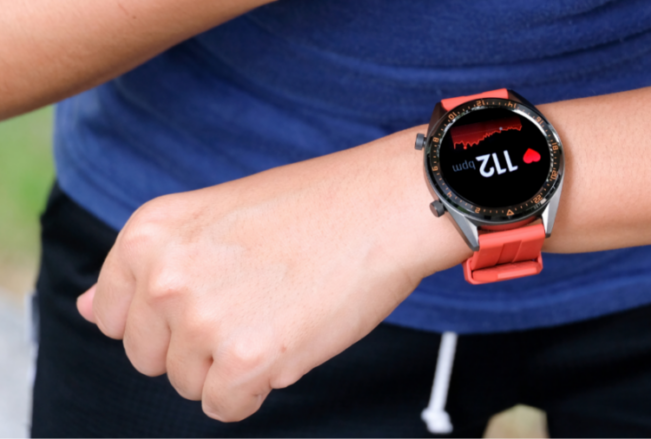
On a Tuesday afternoon in 2023, a 58-year-old jogger collapsed on a trail outside Minneapolis. Before a bystander could dial 9-1-1, the man’s Apple Watch had already detected an irregular heart rhythm, activated an emergency SOS, and transmitted his GPS coordinates to a dispatch center. Paramedics arrived within six minutes. He survived. His watch saved his life, not through any miraculous medical intervention, but through a cellular signal and a well-designed algorithm.
Stories like this are becoming less exceptional and more routine. The convergence of 5G networks, Internet of Things (IoT) devices, and increasingly sophisticated wearable sensors is rewriting the rules of emergency response, disaster management, and everyday personal safety. Wireless technology has moved from a convenience to a critical infrastructure, one that public safety agencies, hospitals, and individuals increasingly rely on when seconds count.
The Wireless Foundation of Modern Emergency Response
Public safety has always depended on communication. From the telegraph lines strung alongside 19th century railroad tracks to the two-way radios that became synonymous with police work in the 20th, each leap in wireless capability has brought a corresponding leap in our ability to protect lives. Today, that evolution is accelerating faster than at any previous point in history.
The modern emergency response ecosystem is built on layered wireless infrastructure. Traditional land mobile radio (LMR) systems—the kind used by police, fire, and EMS—are now being supplemented and, in some cases, replaced by broadband cellular networks. They are capable of transmitting not just voice but high-definition video, biometric data, and real-time mapping information. FirstNet, a nationwide broadband network built specifically for first responders and operated by AT&T, now covers more than 99% of the U.S. population and provides public safety agencies with priority access to spectrum even during network congestion.
The ability to transmit a patient’s vitals from the back of an ambulance to a waiting trauma team changes what’s possible in emergency medicine. That data arrives before the patient does. — Emergency Medical Services Journal, 2024
The shift to broadband is not merely a technical upgrade. It represents a philosophical change in how emergency services operate. Where previous systems were optimized for voice commands and simple location data, modern wireless infrastructure enables what emergency management officials call “situational awareness at scale.” This is the ability to synthesize data from dozens or hundreds of devices simultaneously to build a real-time operational picture of an unfolding event.
Wearable Technology: The Body as a Safety Sensor
Perhaps the most visible face of wireless technology in public safety is wearable devices—gadgets worn on the body that continuously monitor physiological data and can communicate that information over cellular networks. This category has expanded dramatically, from early heart rate monitors worn only by elite athletes to a diverse ecosystem of devices used by patients, workers, children, and the elderly.
Smartwatches and Fall Detection
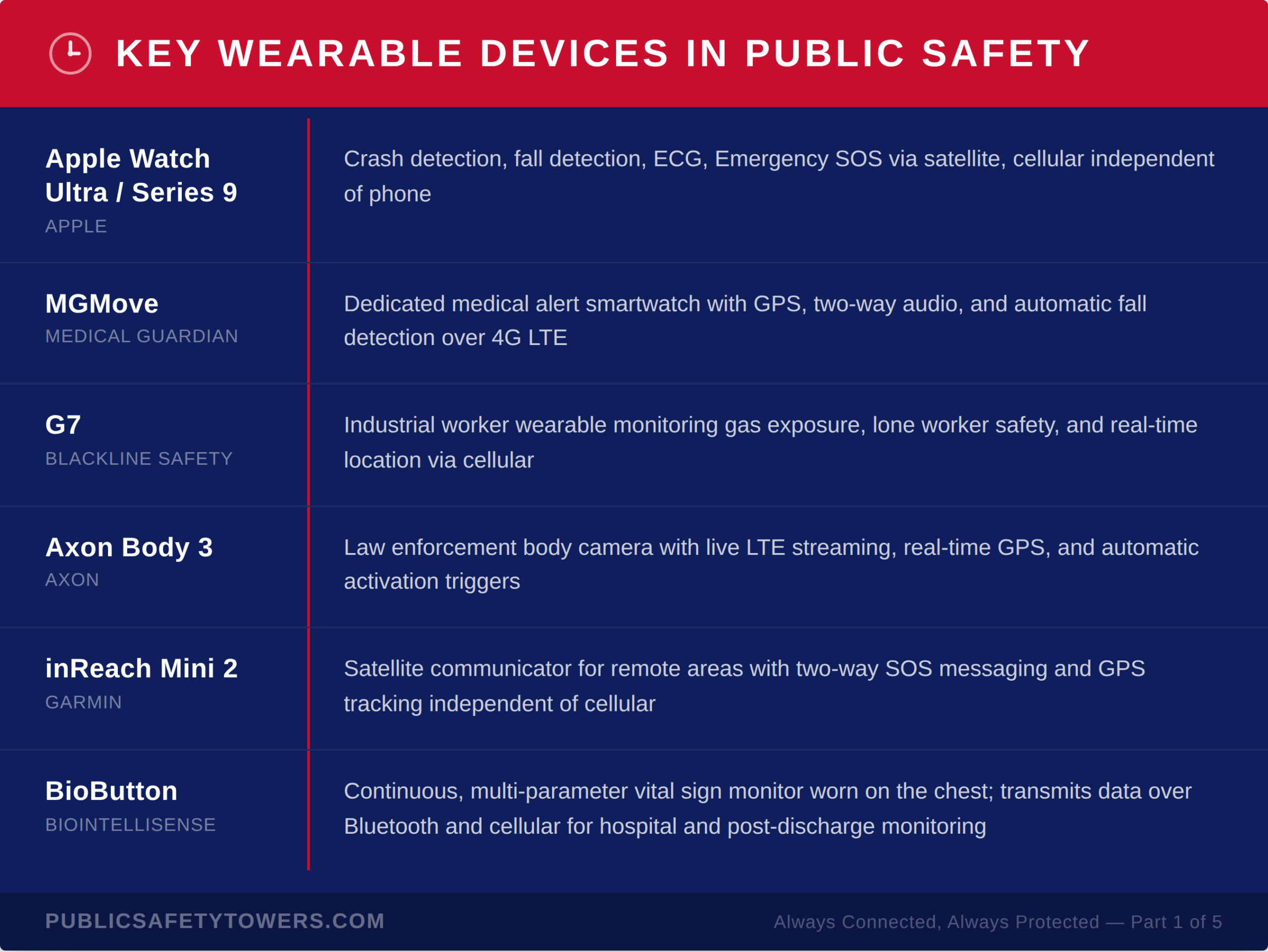
The Apple Watch and comparable devices from Samsung, Garmin, and Google have evolved from fitness accessories into genuine safety tools. Fall detection uses accelerometers and gyroscopes to distinguish a deliberate movement from a sudden, uncontrolled collapse. If no response is detected within a set window, the watch automatically calls emergency services and shares the wearer’s location. This feature uses cellular connectivity to place the call directly, independent of a paired smartphone.
Apple’s Emergency SOS via Satellite, introduced in 2022, extended this capability even further, allowing users in areas with no cellular coverage to send emergency messages via satellite. The feature has been credited with dozens of documented rescues in remote wilderness areas and disaster zones where tower infrastructure was damaged or absent.
Medical Alert Systems
Long before the Apple Watch, medical alert systems occupied this space for older adults and those with chronic conditions. Modern systems like Medical Guardian, Life Alert, and Bay Alarm Medical have replaced the fixed-base stations of previous decades with wearable pendants, wristbands, and belt clips that carry their own cellular SIM cards. When activated, either manually or automatically through fall detection, they connect to a 24-hour monitoring center over a cellular network, which then dispatches emergency services.
Next-generation versions of these devices now incorporate GPS tracking, two-way audio, and rudimentary vital sign monitoring, enabling operators to assess a situation before emergency services arrive. Some are also capable of geofencing, alerting caregivers when a wearer with dementia or cognitive impairment wanders beyond a defined area.
Worker Safety Wearables
In industrial settings, wearable safety technology is helping protect workers in high-risk environments. Devices like the Blackline Safety G7 and Honeywell’s BW Clip use cellular connectivity to monitor gas exposure, physiological stress, and location data for workers in oil fields, chemical plants, mines, and construction sites. If a worker stops moving for an extended period, a potential sign of incapacitation, the device triggers an automated check-in request, and if unanswered, dispatches help.
Similarly, body-worn cameras (BWCs) used by law enforcement now transmit footage in real time over cellular networks. Axon, the dominant supplier of BWCs to U.S. law enforcement, introduced live-streaming capabilities that allow supervisors and dispatchers to see what an officer sees in the field. During a rapidly evolving incident, this capability can shape deployment decisions in ways that static radio communication cannot.
The common thread running through all of these devices is cellular connectivity. Remove the signal, and the safety net disappears.
About the Author: Ken Kehmna is a retired Fire Chief and Senior Operations Advisor for the Western Fire Chiefs Association (WFCA). He also serves as a key advisor to Public Safety Towers Company, bringing more than three decades of public safety leadership experience to PSTC’s mission of strengthening emergency communications infrastructure across communities.
Next in the series: wearable devices are just the beginning. The same wireless connectivity that keeps an individual safe can also reach thousands of people at once. Part 2 looks at how Wireless Emergency Alerts work and the infrastructure behind some of the largest mass evacuations in recent American history.